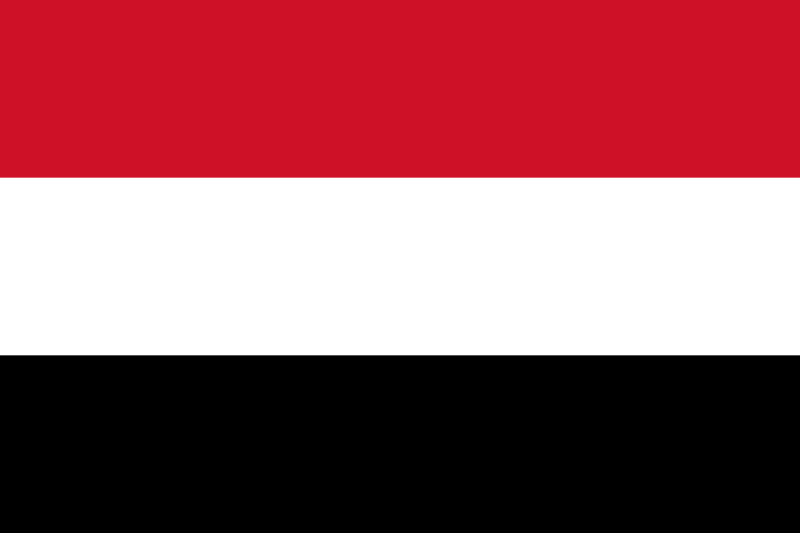
Two countries, get the most number of the votes, and one country, gets the most number of the votes cross linked with visitor's logged in countries, in total 3 countries from each group will advance to the 2nd round.
Ivory Coast
Côte d'Ivoire, Costa de Marfil

Côte d'Ivoire, Costa de Marfil

Orange is the colour of the land, rich and generous, the meaning of our fight, the blood of a young people fighting for emancipation. White is for peace, but peace with justice. Green is for hope and the certainty of a better future. This symbolism is the same as for the orange-white-green flag of Niger, and the vertical positions are influenced by the French tricolor.
Bosnia and Herzegovina
Bosnie-Herzégovine, Bosnia-Herzegovina

The triangle represents the three constituent peoples of Bosnia and Herzegovina, the yellow the sun representing the symbol of hope. The blue and the stars represent Europe, a Europe that Bosnia and Herzegovina is a constituent part of. The colors have been changed to match those of the Council of Europe, which in effect represents a darker blue and yellow.
Sri Lanka
Sri Lanka, Sri Lanka

The eyes - Vigilance and Forward Vision of the State. The hair brushed in the forward direction - Bravery. The sword - defense of the homeland and implementation of the laws of the land. (In some older Kotte era flags, the sword was replaced with a Whip). The multiple lines of hair seen on the head of the lion - Nobility. The Equality of height between the head and the tail - The equality between the ruler and the rules. The strong paws of the lion - The strength of the Sri Lankans. The Four Temple finales (or koth) - Buddhism being the national religion of Sri Lanka.
Belize
Belize, Belice

The white disk in the center has 50 olive leaves along its inner periphery. This represents the year 1950, when British Honduras (Belize's former name) began its quest for independence from the UK. When Belize became independent in 1981, the two red stripes were added to the previous flag. In the center of the white disk there is a coat of arms divided in three sections. The left field holds an oar and a sledgehammer, the right one contains a saw and an ax, and the bottom one has a sailing ship. If one looks at the ship closely, one sees a red flag flying which might be a British Red Ensign. Above the coat of arms, there is a tree, and below the c.o.a., one can see Belize's motto "Sub umbra floreo" -- I flourish in the shadow (referring to the dependence from the UK). There is a mulatto man holding an ax to the left of the coat of arms. On the right side, a black man holds an oar.
San Marino
Saint-Marin, San Marino

Two equal horizontal bands of white (top) and light blue with the national coat of arms superimposed in the center; the main colors derive from the shield of the coat of arms, which features three white towers on three peaks on a blue field; the towers represent three castles built on San Marino's highest feature Mount Titano: Guaita, Cesta, and Montale; the coat of arms is flanked by a wreath, below a crown and above a scroll bearing the word LIBERTAS (Liberty); the white and blue colors are also said to stand for peace and liberty respectively.
Vietnam
Viêt-Nam, Vietnam

Red symbolizes revolution and blood, the five-pointed star represents the five elements of the populace - peasants, workers, intellectuals, traders, and soldiers - that unite to build socialism. The flag was designed in 1940, and used during an uprising against French rule that year.
Andorra
Andorre, Andorra

The design is related to the flags of France and Spain, the two states that protect the independence of the small state. A flag of three bars is similar to that of the French Tricolore, while the pattern of a wider middle stripe can be noted on the Spanish flag. The blue and red of the Andorran flag are also found on the French flag, with red and yellow also being the principal colours of the Spanish flag. The coat of arms features a quartered shield with the emblems of : Urgell, Foix, Bearn, and Catalonia. The flag resembles to Chad, Romania and Moldova.
Tonga
Tonga, Tonga

The cross reflects the deep-rooted Christianity in Tonga; red represents the blood of Christ and his sacrifice; white signifies purity. The flag looks similar to the flag of the Red Cross. The flag was originally identical to that flag, but to avoid confusion, it was changed so that the red cross appeared as a canton of a red ensign, making it similar to the 17th-century English Red Ensing.
Jordan
Jordanie, Jordania

It is based on the flag of the Arab Revolt against the Ottoam Empire during WWI. The flag consists of horizontal black, white, and green bands that are connected by a red chevron. The colors stand are the Pan-Arab, representing the Abbasid (black band), Umayyad (white band), and Fatimid (green band) caliphates. The red chevron is for the Hashemite dynasty, and the Arab Revolt. The seven-pointed star stands for the seven verses of the first surah in the Qur'an, and also stands for the unity of the Arab people.
Romania
Roumanie, Rumania

Modeled after the flag of France, the colors are those of the principalities of Walachia (red and yellow) and Moldavia (red and blue), which united in 1862 to form Romania; the national coat of arms that used to be centered in the yellow band has been removed. The flag resembles to Chad, Andorra and Moldova.